
Bears 7-2: Chicago's Week of Rest X-Ray
The Bears enter their week of rest with a 7-2 record, a defined identity, and five divisional matchups ahead. We analyze strengths, risks, and the path to the playoffs.
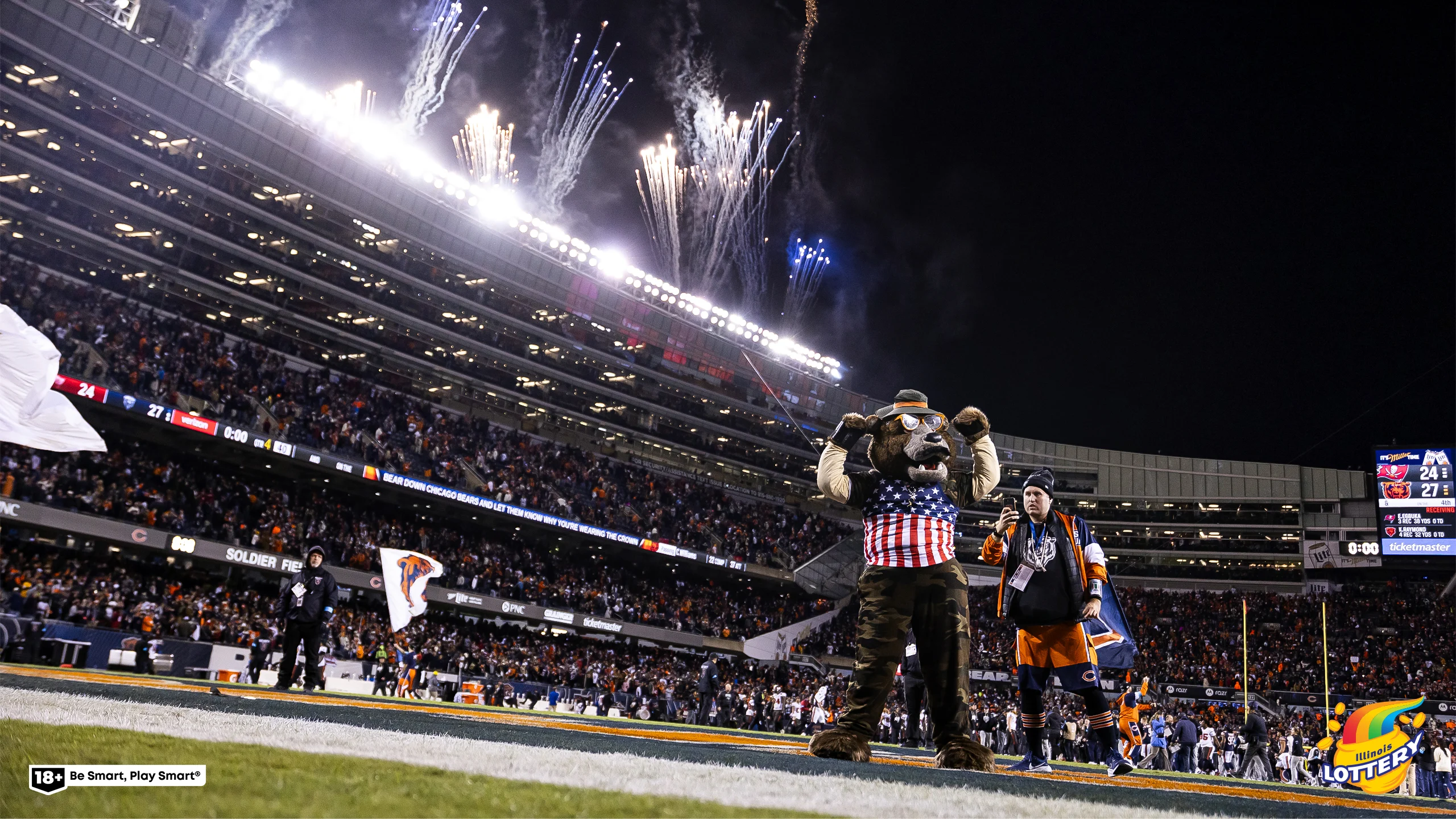
The Halas Hall workshop takes a break: X-Ray of 7-2 Bears dreaming big
Chicago arrived at its week of rest with a 7-2 record, four consecutive victories, and its best start since 2012. The Ben Johnson-led team has already shown it can win in different ways; now it must correct the turnovers and survive five divisional matchups to turn the illusion into a real playoff run.
Week 10 brought silence to Soldier Field, but not to the Chicago Bears’ season.
After nine games, Chicago entered its week of rest with a 7-2 record, four consecutive victories, and enough arguments to be considered one of the most dangerous teams in the National Conference.
The break came at a convenient time. Caleb Williams received hits during the past few weeks, the defense carried a significant number of plays, and several key pieces continue recovering from various injuries. Ben Johnson can use the pause to reduce physical load, review trends, and prepare his team for a schedule that will become much more challenging.
But the weekend also reminded that no record guarantees peace within the NFC North.
Detroit’s and Minnesota’s victories temporarily moved Chicago to the tiebreaker division third place. Few teams with a 7-2 record would have to look up in their own division. The Bears do.
That is the reality of competing in the most demanding division in the NFL: Chicago has built one of the best first halves of its recent history, but it has still not won anything.
A season that survived its first major crisis
The identity of these Bears was not built solely during the spectacular victories. It also emerged when the original plan stopped being possible.
The season began with the explosive offensive performance of Week 1, when Chicago defeated Carolina 59-37 and produced one of the most impressive performances in franchise history. It seemed the perfect start for the partnership between Ben Johnson and Caleb Williams.
The stability lasted only a short time.
Williams was injured after Week 2 and missed three games. The absence of the franchise quarterback forced the coaching staff to modify the offense, reduce risks, and find different ways to win.
In previous seasons, a similar injury would have served as an anticipated explanation for the collapse. This time, the opposite happened.
With Tyson Bagent and Case Keenum behind center, Chicago relied on the offensive line, the running game, and clock control. The Bears did not attempt to pretend their backups could execute exactly the same attack designed for Caleb. Johnson adapted the system to the talent available.
The best example came against the Jets. Chicago held the ball for 42 minutes and 45 seconds, executed 89 plays, produced 34 first downs, and did not turnover once.
It was not a flashy performance. It was a demonstration of absolute control.
By the time the week of rest arrived, the Bears led the NFL with an average of 34 minutes and 31 seconds of possession per game. That figure explains a significant part of their record: Chicago has learned to control games even when its offense does not produce explosive plays.
The return of Caleb raised the ceiling
The most dangerous version of the Bears appeared when Williams returned to the lineup.
Since his return in Atlanta, Chicago scored at least 30 points in three consecutive games and regained the ability to attack every part of the field. The offense stopped relying exclusively on the running game and returned to threatening with deep passes, intermediate routes, and pre-snap movements.
Caleb’s growth has been especially noticeable at the start of games. Entering the break, he led the NFL during the first quarters with:
- 78.3% completion rate
- Five touchdown passes
- 130.3 passer rating
Chicago also had beaten its rivals 59-0 during the first quarters of its last six victories.
That early dominance reflects the quality of the first plays designed by Johnson, but also the preparation of Williams. The quarterback is arriving at the field with a clear read of the opposing defensive plan and executing before the adjustments begin.
The next step will be maintaining that precision for four quarters.
Against Tampa Bay, Williams threw four interceptions after an explosive start. The Bears survived thanks to the defense, the special teams, and a final drive controlled by Caleb, but the game demonstrated that the difference between a dangerous offense and a truly dominant one continues to be ball protection.
An offense that no longer depends on a single name
The offensive growth does not belong exclusively to the quarterback.
D’Andre Swift and Kyle Monangai gave Chicago a physical identity. The offense arrived at the break with 303 rushing yards and 17 rushing touchdowns, numbers that placed it among the most productive units in the league by rushing.
Swift provides speed, receiving ability, and the ability to attack the outside spaces. Monangai offers the physical component: runs between the tackles, contact, and wear. The combination allows Johnson to change the pace without changing the same offensive personnel.
The receiving group also began to define its roles.
Rome Odunze continues to be the primary threat on the outside. Luther Burden III became a problem after the reception and added an explosive dimension that isn’t always reflected in traditional statistics. Colston Loveland, on the other hand, solidified himself as a reliable option in the middle of the field and in pressure situations.
Depth matters. Chicago won with Caleb, Bagent and Keenum; through deep passes, 17-play series and controlled games from the run.
There is no single formula to beat these Bears.
The Jeffery Simmons Factor
During the first few weeks, the main question was on the defensive line.
Chicago could produce timely plays, but didn’t generate consistent pressure without sacrificing additional players. The secondary had to hold coverage for too long and the defense began to wear down as games progressed.
Ryan Poles responded before the deadline with one of the most aggressive moves of his tenure: trading first-round selections in 2027 and 2028, as well as a fourth-round pick in 2027, to acquire Jeffery Simmons and a fifth-round pick in 2028.
The price was enormous. The impact was immediate.
In Seattle, Simmons recorded six tackles, a sack and an interception a few days after arriving on the team. Against Tampa Bay, he again collapsed the center of the protection and helped create opportunities for Montez Sweat, Austin Booker and Grady Jarrett.
The transformation isn’t just about Simmons’ statistics. His presence forces the opponent to adjust protections and decide which defender can receive an individual block.
Before his arrival, opposing offenses could focus on Sweat. Now they must address pressure from the center and the edges at the same time.
Two games aren’t enough to declare a trade won that includes two first-round selections. That judgment will depend on results in January and Chicago’s ability to maintain its competitive window without that draft capital.
However, Simmons already demonstrated why the Bears decided to act now: Poles and Johnson believe this team is ready to compete, not in two years, but this season.
The defense learned to save games
The unit coached by Dennis Allen came into the halftime break allowing an average of 20.4 points per game. More important than the number was the way it responded in the last two games.
Against Seattle, the defense limited the champion to a conversion on 11 third downs. Simmons altered the line, Booker blocked a field goal and James Lynch converted a tipped pass into an interception.
A week later, the Chicago offense turned the ball over five times against Tampa Bay. The defense received short fields, returned repeatedly to the field and still prevented the Buccaneers from taking control.
The game-changing play belonged to Jaylon Johnson, who intercepted Baker Mayfield and returned the ball to the end zone.
The defense hasn’t been perfect. It still allows deep connections and relies too much on individual interventions. The arrival of Simmons improves the pressure, but doesn’t eliminate doubts about the depth of the secondary.
Nevertheless, the group has already proven it can win a game when the offense loses its way.
The numbers behind the 7-2 record
The numbers from the first nine games describe a balanced, productive team capable of controlling the tempo. They also reveal the problem that could stop it.
| Metric | Record after nine games | NFL Rank |
|---|---|---|
| Points per game | 26.8 | 7th |
| Points allowed per game | 20.4 | 8th |
| Average time of possession | 34:31 | 1st |
| Total rushing yards | 303 | 1st |
| Touchdowns on rushing | 17 | 2nd |
| Turnover differential | -4 | 29th |
The turnover differential is the most concerning anomaly.
Chicago lost 17 balls and recovered 13. It turned the ball over five times both in the loss to Green Bay and the win against Tampa Bay.
Surviving one five-turnover game demonstrates character. Repeating the problem represents a trend.
The Bears have enough talent to overcome errors against some opponents. In the playoffs, where differences are minimal and every possession gains value, that generosity could end a season.
The priority during the break must be identifying why turnovers keep happening: quarterback decisions, poor protection, missed routes, lack of security after the catch, or a combination of all of them.
It’s not enough to ask Caleb to be more careful. The correction must involve the entire offense.
Five divisional games will decide the fate
A 7-2 record puts Chicago in the playoff race, but the second half of the season will be much more difficult.
Five of the remaining eight games will be against NFC North opponents. The schedule includes a visit to Detroit on Thanksgiving, the holiday matchup against Green Bay at Soldier Field and the season finale in Minnesota.
There are also demanding trips against Buffalo and Miami.
The start of 0-2 within the division forces Chicago to regain ground. The overall record may open the door to a wild card, but the path to the division title will depend on what happens against the Lions, Packers and Vikings.
The good news is that the Bears control their destiny. The bad is that they’ll have to earn it directly against the teams that also chase it.
The second half won’t offer too many weeks to correct mistakes. Each divisional matchup will simultaneously change the standings and tiebreakers.
The columnist’s note: the tough part begins now
Arriving at the break with a 7-2 record would have seemed like a dream before the season started. After everything experienced in the first nine games, it starts to feel more serious.
These Bears did not get here by taking an easy path.
They lost Caleb for three games. They had to win with backup quarterbacks, rebuild their offensive identity, withstand defensive injuries, and recover from a beatdown in Lambeau Field. Then they beat the champion in Seattle and survived five turnovers against Tampa Bay.
We are not seeing a team that needs everything to go perfectly. We are seeing one that has found different ways to respond.
That’s what fuels the hope.
There’s also something less quantifiable: the way the players talk about Ben Johnson and the confidence they show among themselves. When one unit fails, the other doesn’t seem to look for blame. The defense saves the offense, Caleb returns to the field after an interception, and Cairo Santos finishes the job.
In Chicago, it’s been a long time since there has been such a connection between the coach, the locker room, and the fans.
But the bye week also needs to serve to temper the excitement. The Bears are 7-2 and, despite that, temporarily hold the third spot in their division. They have won four consecutive games, but they carry a negative turnover differential. Simmons transformed the defense, although the cost of his arrival forces them to compete for something more important than a good regular season.
The first half brought back hope. The second half will decide if that hope was justified.
After nearly two decades learning to distrust, Bears fans have reasons to believe. Not because the team is perfect, but because it has shown it can survive its imperfections.
The bye week is over. The Halas Hall training facility reopens its doors, and the next test will be against New Orleans at Soldier Field.
From now on, simply appearing as a contender is no longer enough.
It’s time to act like one.
Bear Down.