
Bears 27-24 Buccaneers: Cairo Santos and the defense save a chaotic night in Chicago
The Chicago Bears survived five turnovers and defeated Tampa Bay 27-24 with a field goal by Cairo Santos at the end of the clock.
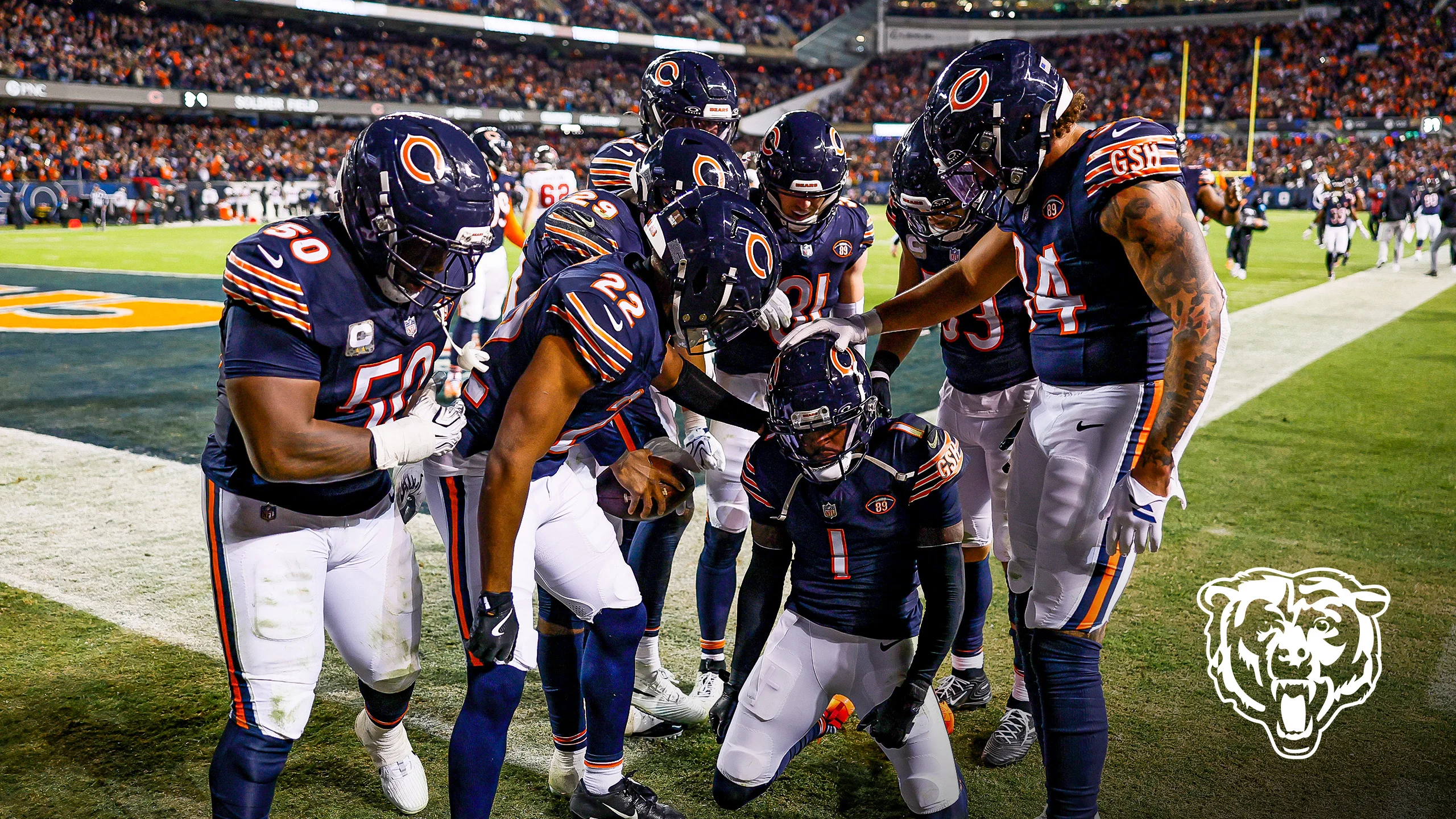
The orange wave withstood the chaos: Cairo Santos and the defense saved the Bears against Tampa Bay
The Chicago Bears survived five turnovers, four interceptions by Caleb Williams and a Tampa Bay comeback to prevail 27-24. Cairo Santos decided the game with a 38-yard field goal as the clock expired and Chicago improved its record to 7-2.
There are victories that confirm the quality of a team and others that reveal its ability to survive when almost everything goes wrong. The night of Sunday at Soldier Field belonged to the second category.
In a stadium covered in orange, the Bears squandered a 14-point lead, turned the ball over five times and allowed the Buccaneers to tie the game with less than three minutes remaining. For much of the night, Chicago seemed determined to gift a game that had started dominating.
The defense refused to let it happen. Caleb Williams found the necessary calm to lead the final drive and Cairo Santos completed the rescue with a 38-yard kick as the clock reached zero.
The result was a dramatic 27-24 that placed the Bears at 7-2. It was not a clean performance nor an offensive display. It was a victory built from resilience.
A explosive start before the chaos appeared
Ben Johnson’s offense began the game with the aggressiveness that has characterized its best performances.
Williams found Rome Odunze for a nine-yard touchdown and, shortly after, connected with Luther Burden III on a 56-yard play that ended in the end zone. Chicago quickly took a 14-0 lead and Soldier Field seemed ready for another prime-time celebration.
The night changed when Tampa Bay’s secondary began anticipating the quarterback’s decisions.
Williams finished with 279 yards and two touchdown passes, but threw four interceptions. Zyon McCollum recorded two of them, while Tykee Smith and Alex Anzalone completed a defensive performance that kept Tampa Bay in the game.
The four interceptions added to a lost fumble. Chicago ended with five turnovers and lost the possession battle 5-2.
That difference usually decides a game in the NFL. The Bears survived because their defense repeatedly turned short fields into opportunities wasted by Tampa Bay.
The offense will need to study the causes. Some interceptions resulted from poor decisions; others, from defensive anticipation or lack of coordination in routes. Regardless of the origin, five gifted possessions represent a burden no team can sustain regularly.
This time Chicago found a way out. It cannot turn it into a habit.
Jaylon Johnson changed the game
The most important defensive play came in the third quarter.
With Chicago leading 17-13 and Tampa Bay threatening to take the lead, Jaylon Johnson read the eyes of Baker Mayfield, intercepted the pass near the 33-yard line and returned it to the end zone.
The pick-six not only produced seven points. It also prevented the Buccaneers from completing a comeback that seemed inevitable and restored energy to a stadium that was beginning to feel the weight of turnovers.
For Johnson, the play had additional significance. His performance had been questioned during the first weeks of the season, especially after allowing deep connections and showing less dominance in individual coverage. Against Tampa Bay, he once again displayed what made him one of the league’s most valued cornerbacks: anticipation, ball security, and the ability to alter a game with a single read.
Chicago needed a response from its best man in coverage. Johnson delivered at the most delicate moment.
Jeffery Simmons changes the line
In his first game as a Bear at Soldier Field, Jeffery Simmons once again justified the attention his arrival generated.
The defensive tackle finished with four tackles, a sack and a deflected pass, but his influence was broader than the statistics. Simmons collapsed the offensive line, forced Mayfield to abandon his dropback and created opportunities for other defenders to reach the quarterback.
Chicago ended with four sacks and limited Tampa Bay to two conversions in 12 third downs.
Simmons worked alongside Montez Sweat, Austin Booker and Grady Jarrett to prevent the Buccaneers from fully exploiting the five additional possessions they received. The defense was repeatedly placed in compromised situations and, yet, kept the team in the game.
A week after altering Seattle’s offensive line, Simmons once again demonstrated that his presence changes the way the opponent must protect the quarterback.
The price paid by him continues to be high and the definitive evaluation will come in the playoffs and during the next seasons. However, his first two games offered exactly the immediate impact that Chicago sought when making the trade.
The controversy on the line of scrimmage
The frustration of Tampa Bay was evident on the line of scrimmage. The Buccaneers committed five penalties for false start, several of them in situations that destroyed promising drives.
After the game, Baker Mayfield accused Chicago’s defensive line of mimicking the offensive cadence:
“In the last play I know they were mimicking and shouting our snap count, something that is not allowed. It’s difficult for the officials to call it because they are not exactly on the line of scrimmage, but you can’t do that.”
Tampa Bay’s coach, Todd Bowles, avoided turning the situation into an excuse. His response shifted the responsibility to his own players:
“It wasn’t a communication problem or what they did. We have to maintain discipline and control the movement.”
There may be a regulatory discussion about what happened on the line, but the five penalties also reflected the combined effect of Soldier Field’s noise, defensive pressure, and an offensive team that never quite felt comfortable.
The fans did not appear only as the background of the broadcast. They became part of the game.
Tampa Bay returns and Caleb must forget his mistakes
The defense held Chicago during almost the entire night, but Tampa Bay found a way to tie the game.
Bucky Irving scored his second rushing touchdown and Mayfield completed the two-point conversion to put the score at 24-24 with 2:51 remaining.
The moment called for a response from Williams.
During the first 57 minutes he had thrown four interceptions. Any other wasted possession could erase the work of the defense and turn a difficult night into an unforgivable loss.
Williams did what a franchise quarterback must do: he left behind the mistakes.
He did not try to compensate for four interceptions with an impossible throw nor attempt to become a hero in a single play. He led a patient drive, protected the ball and led the Bears to field goal range while consuming the remaining seconds.
It was not the most spectacular drive of his career. It was probably one of the most important.
The maturity of a quarterback is not measured solely by avoiding mistakes. It is also observed in his ability to keep playing after making them. Williams had one of his most error-prone nights, but when Chicago needed a clean possession, he delivered it.
Cairo Santos and a kick to close the rescue
With the ball placed at the 20-yard line of Tampa Bay and the clock about to expire, the game was in the hands of Cairo Santos.
The attempt was for 38 yards. The distance did not seem extraordinary, but the context transformed the kick: prime time, tied game, and a night in which the Bears had survived five turnovers.
Santos did not hesitate.
The kick went through the uprights as the clock reached zero and Soldier Field exploded. After a night full of questionable decisions, penalties, lost balls and wasted opportunities, Chicago found a simple ending: a clean snap, good placement and the precision of its kicker.
Santos explained afterward that he wanted to support his teammates:
“I had to back them up. This defense and this team fought too hard to not finish the job.”
It was not just a winning kick. It was the final point of a game the Bears were close to losing several times and, yet, never completely let slip away.
The columnist’s note: the contenders also win this way
After defeating the champion in Seattle, the Bears returned to Chicago with the opportunity to confirm that performance was not an exception. The confirmation came, although in a completely different way.
Against the Seahawks we saw a team capable of imposing its will. Against Tampa Bay we saw one capable of surviving its own mistakes.
That also matters.
For too many years, a night with five turnovers would have ended in a loss, finger-pointing, and a week of searching for culprits. This team found another way out. The defense answered every time the offense put it against the wall; Jaylon Johnson produced the play that changed the score; Caleb managed to forget his four interceptions and Santos finished the job.
The way these players talk about Ben Johnson and the confidence they show among themselves does not seem manufactured for a press conference. It is observed when a unit must rescue another, when the quarterback returns to the field after his worst mistake, and when a team refuses to break down in the middle of the chaos.
Those of us who have followed the Bears for years know that is not a common feeling.
The 2006 team took us to the Super Bowl. The 2018 season briefly brought hope back and once again made Soldier Field a daunting place. But that illusion did not produce continuity. Since then, fans have learned to distrust even the good moments.
This group is starting to break that resistance.
The 7-2 record does not guarantee anything. Caleb’s four interceptions and the five total turnovers cannot be buried under the celebration. A true contender must learn from its mistakes before facing a rival that knows how to punish them.
But we should not minimize what happened.
The Bears won a night in which they played far from their best version. They did it because the defense held the game, because there is confidence among the three units, and because, at the decisive moment, no one seemed to expect anything to go wrong.
After so many years, perhaps that is the most difficult difference to explain and the easiest to feel.
Chicago is not just winning games. It is recovering the faith of a fanbase that has waited too long for the next disappointment.
Bear Down.