
Bears 23, Jets 12: A Historic Suffocating Performance at Soldier Field
Game recap of Bears vs. Jets Week 4 of the NFL 2026: Chicago dominated 42:45 in possession, produced 492 yards, did not punt, and closed out the 23-12 victory with Kyle Monangai and Tyson Bagent.
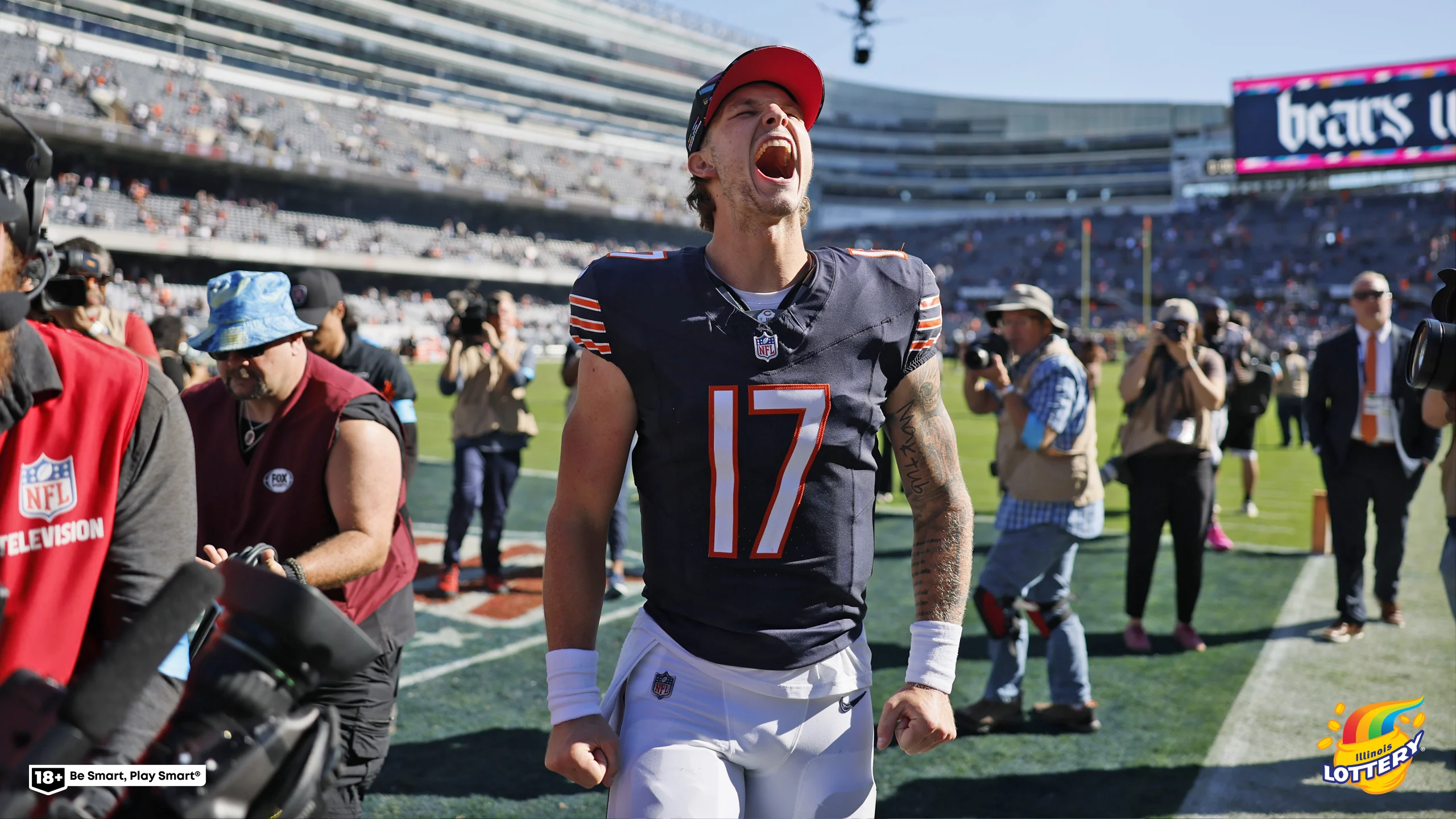
There are victories decided in one play and others built by slowly taking the air out of the opponent. The 23-12 Chicago Bears victory over the New York Jets belonged to the second category.
Chicago had the ball for 42 minutes and 45 seconds, executed 89 plays, achieved 34 first downs, and outgained New York 492-157 in total yards. The Bears did not punt once. In the fourth quarter, the Jets possessed the ball for only 45 seconds.
The score suggests a relatively close game; the development tells another story. The Bears controlled the field, the clock, and the physical toll. It was not a perfect performance—two turnovers and a 2-of-7 efficiency in the red zone prevented a larger margin—but it was a demonstration of rare territorial dominance in the franchise’s history.
The clock as an offensive weapon
The numbers explain the feeling of suffocation:
- 42:45 of possession, the highest figure for Chicago in a game without overtime since 1994.
- 89 offensive plays, the fifth highest number for the Bears since at least 1941 and the highest since 1999.
- 34 first downs, the highest recorded by the franchise since at least 1941.
- 492 total yards, compared to just 157 from New York.
- Zero punts, something Chicago had not achieved since September 2014 against Green Bay.
The volume difference was extraordinary. The Jets executed only 32 plays throughout the game. Chicago achieved more first downs than the total number of offensive plays by their opponent.
However, the dominance also left a warning. Accumulating nearly 500 yards and scoring 23 points reveals that the offense still needs to be more decisive near the goal line. Two apparent touchdowns by D’Andre Swift were nullified after video review during the first possession, which ended with a turnover on downs at the 1-yard line. Later came an interception and a fumble.
Chicago won because it never abandoned its identity and because its defense almost always returned the ball quickly. Against a more efficient opponent, squandering so many opportunities could be costly.
Kyle Monangai took control
The individual story of the afternoon was Kyle Monangai. The second-year running back finished with 30 carries for 146 yards and two touchdowns, plus a four-yard reception. His 30 attempts are the highest number for a Chicago player since David Montgomery’s 32 in December 2020.
Monangai did not dominate with spectacular runs on every carry. He did it by advancing after the first contact, falling forward, and converting modest runs into cumulative gains. He scored from a yard in fourth down during the first quarter and returned to the end zone with a five-yard run in the third.
The offensive line had a decisive role. Darnell Wright and Jonah Jackson opened up the space on the second touchdown, while Theo Benedet provided stability on the left side. Chicago finished with 232 rushing yards on 54 carries and kept a fatigued defense on the field for almost three quarters of the game.
“When you see a running back play like that, as the one calling the plays, you just want to keep giving him the ball. It elevates everyone blocking for him and gives a spark to the whole unit.”
— Ben Johnson, on Kyle Monangai.
Swift’s role deserves precision. The veteran lost the ball at the start of the second half and did not return. Johnson confirmed that his absence was not due to an injury, but did not explicitly state that he had been disciplined. In practice, the result was clear: Monangai took control of the backfield and did not give any reason to take it away.
Tyson Bagent directed without trying to be Caleb
Tyson Bagent made his first start since 2023 and completed 25 of 34 passes for 268 yards, with an interception and no touchdowns. He did not need to imitate Caleb Williams or reenact Case Keenum’s performance against Philadelphia. His task was to keep the offense on pace, respond to the pressure, and allow the running game to set the tone.
Bagent found Rome Odunze six times for 94 yards. The 37-yard connection before halftime set up Cairo Santos’ second field goal and allowed Chicago to lead 13-3 at halftime. Colston Loveland added six receptions for 57 yards, his best performance of the season.
The performance had errors. Bagent threw an interception to Minkah Fitzpatrick in the second quarter, the first intercepted by the Jets since the end of the 2024 season. Nonetheless, he remained calm under pressure and posted personal bests in passing yards.
Ben Johnson opened the game with a trick play: Case Keenum lined up under center and Bagent lined up as a receiver on the first play. Keenum handed the ball to Swift and left the field. The coach described the appearance as a ‘ceremonial first play,’ a combination of recognition for Keenum’s performance against the Eagles and a playful response to reports that had prematurely announced Bagent’s starting role.
The occurrence worked as an anecdote. The real merit was that the second and third quarterbacks of Chicago won consecutive games while Williams recovered. The Bears became the first team since Jacksonville in 1997 to have victories by three different quarterbacks in the first four weeks of a season.
The defense did not let New York breathe
The unit under Dennis Allen completed its third consecutive game allowing one touchdown or fewer. After allowing 37 points in the opening, the defense has allowed only two touchdowns in its next three games.
The Jets finished 0 of 7 on third downs, the first time since 1997 that Chicago did not allow a single third down conversion. New York managed only seven first downs and 59 rushing yards. Garrett Wilson, their leading receiver, was limited to three catches.
The pressure appeared when it mattered most. The Bears recorded three sacks and forced the Jets out of favorable situations. New York received two possessions inside Chicago’s territory after Bagent and Swift’s drives, but only scored six points via field goals.
The only serious break was a pass from Geno Smith to Isaiah Williams for a 58-yard touchdown. Williams outran Tyrique Stevenson and cut the deficit to 23-12 with 9:16 remaining. It was a costly coverage error, although isolated within an otherwise dominant defensive performance.
Nine minutes and sixteen seconds to close the door
The Jets’ touchdown left enough time to imagine a comeback. New York never recovered the ball.
Chicago built a final series of 18 plays and 60 yards, produced six first downs, converted five third downs, and consumed the remaining 9:16. The Jets used up their three timeouts; the Bears reached the opponent’s territory and ended up kneeling.
The series wasn’t flashy. It was better than that: it was definitive. Monangai ran between the tackles, Bagent found Loveland for 18 yards on a crucial play, and the offensive line kept pushing when everyone in the stadium knew Chicago wanted to run the clock.
As Bagent put his knee to the ground, Take Me Home, Country Roads began to play at Soldier Field. The tribute to the quarterback born in West Virginia turned the closing moments into a memorable scene. Bagent described it as a full-circle moment and remembered growing up following Geno Smith, another figure linked to the state.
The columnist’s note
The Bears are 3-1 after winning with Caleb Williams, Case Keenum, and Tyson Bagent. That depth speaks well of the locker room and coaching staff, but the most important data is another: the team has discovered different ways to win.
Chicago scored 59 points in Carolina, survived a defensive battle against Philadelphia, and subdued the Jets through possession and attrition. On Sunday, they didn’t need touchdown passes or miracle plays. They needed patience, rushing power, and a defense that almost never let their opponent rest.
The next step will be converting such volume into more points. Dominating 492-157 in yards and finishing with an 11-point margin reflects Chicago’s superiority, but also its shortcomings in the red zone and the potential cost of losing two fumbles.
The victory was decisive. The execution can still be more so.
Now comes Green Bay, a much tougher test and a stage where every wasted opportunity could change the game.
Bear Down.